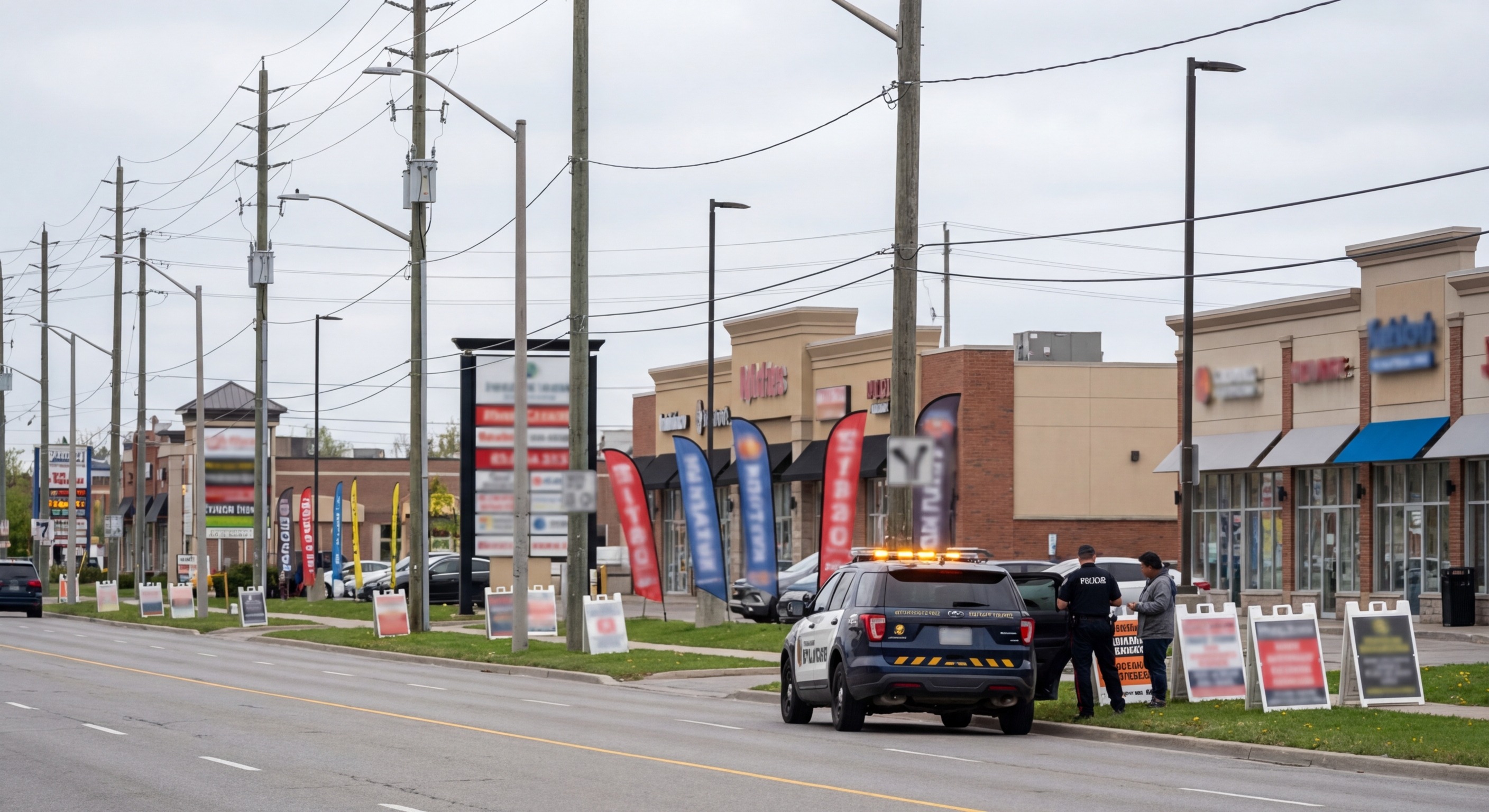
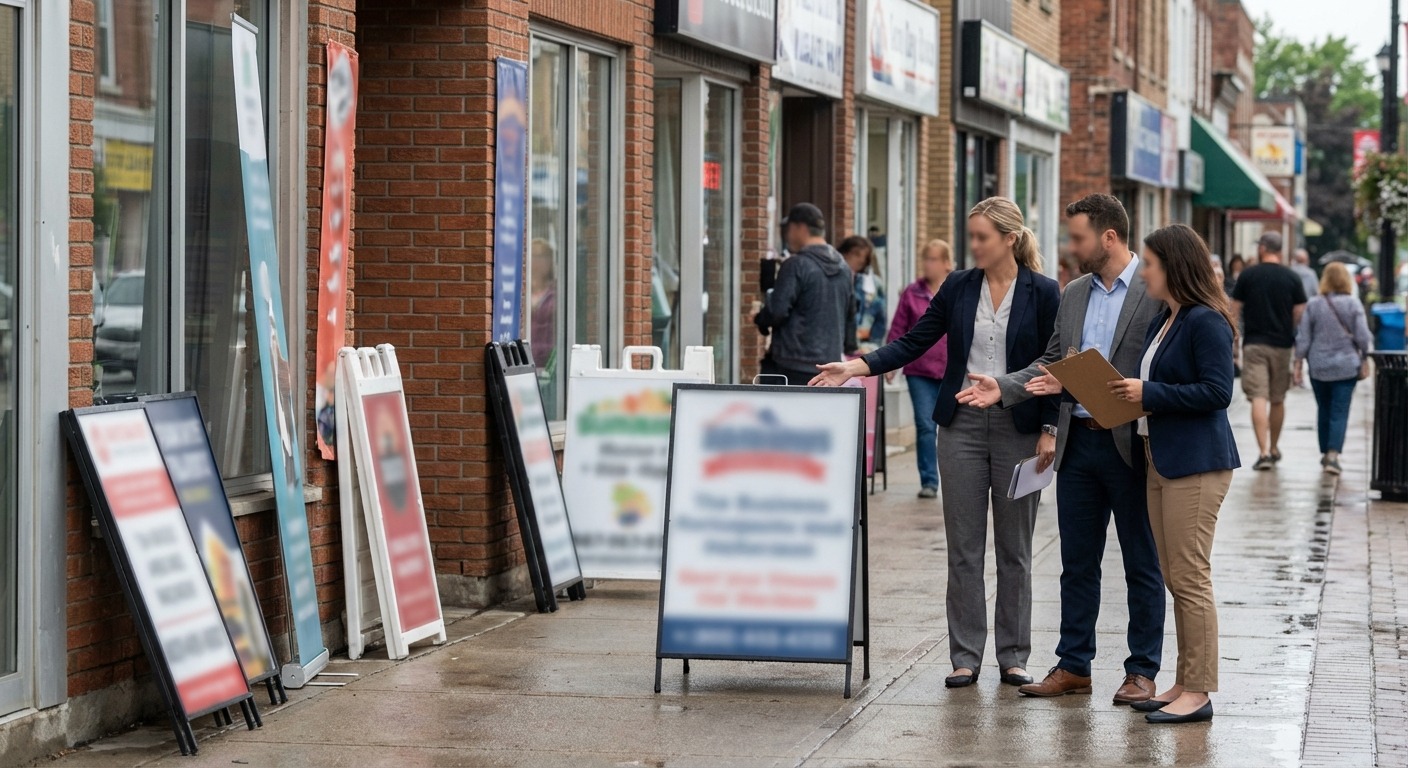
Sign bylaws exist in every Ontario municipality. Most people never read them until they get a fine or watch a neighbour's complaint go nowhere. This site breaks down what actually happens — the rules, the enforcement gaps, and the politics behind it all.
Ontario municipalities regulate signs under authority from the Municipal Act, 2001 (Section 99). The rules vary wildly from city to city.
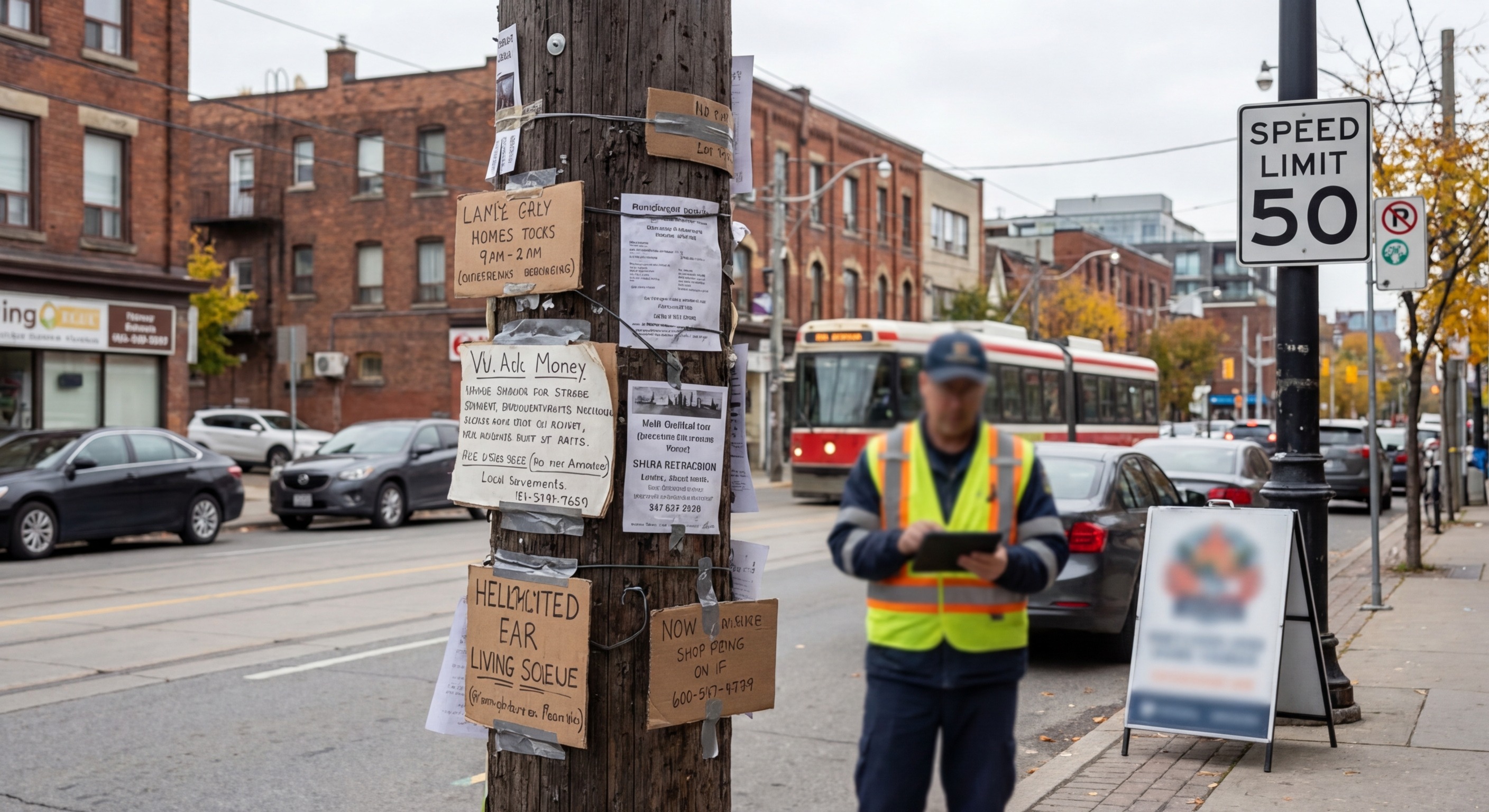
No permit, wrong size, placed in the right-of-way, expired temporary permit — the actual reasons bylaw officers pull signs down.
BylawsHow the Municipal Act gives cities sign authority, what bylaws typically cover, and why Toronto's Chapter 693 looks nothing like Petawawa's By-Law 1573/23.
PermitsApplication fees from $50 to $2,000+. Processing times from two days to two months. What gets rejected and why.
EnforcementPart IX Provincial Offences Act fines, sign confiscation, cost recovery for removal — the real consequences when compliance notices get ignored.
Different signs, different rules. Some need permits. Some are banned outright. Some exist in a grey zone that municipalities argue about constantly.
The single most complained-about sign type in Ontario. Every city has different rules, and half the signs you see violate at least one of them.
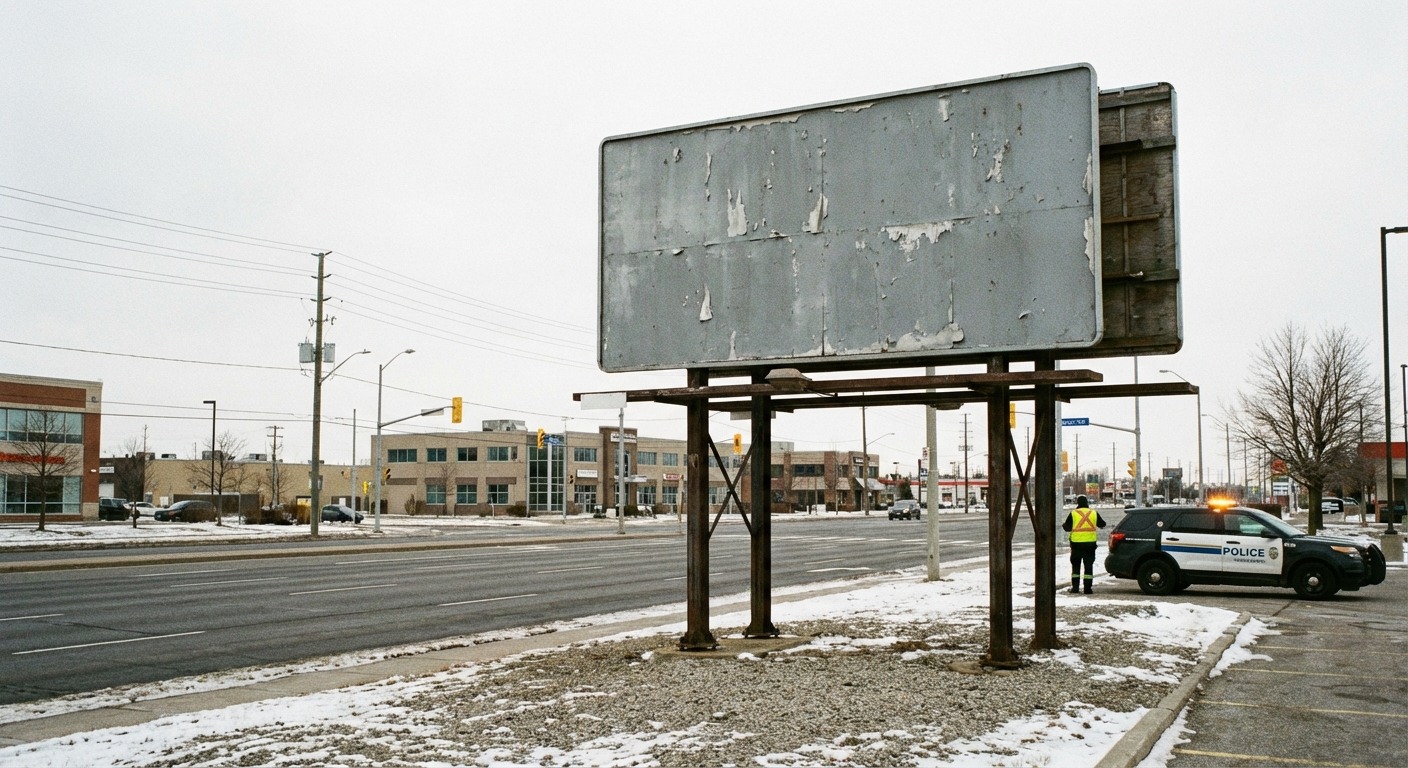
Third-party advertising worth millions. Toronto's sign tax, Outfront and Pattison's lobbying, and why illegal billboards stay up for years.
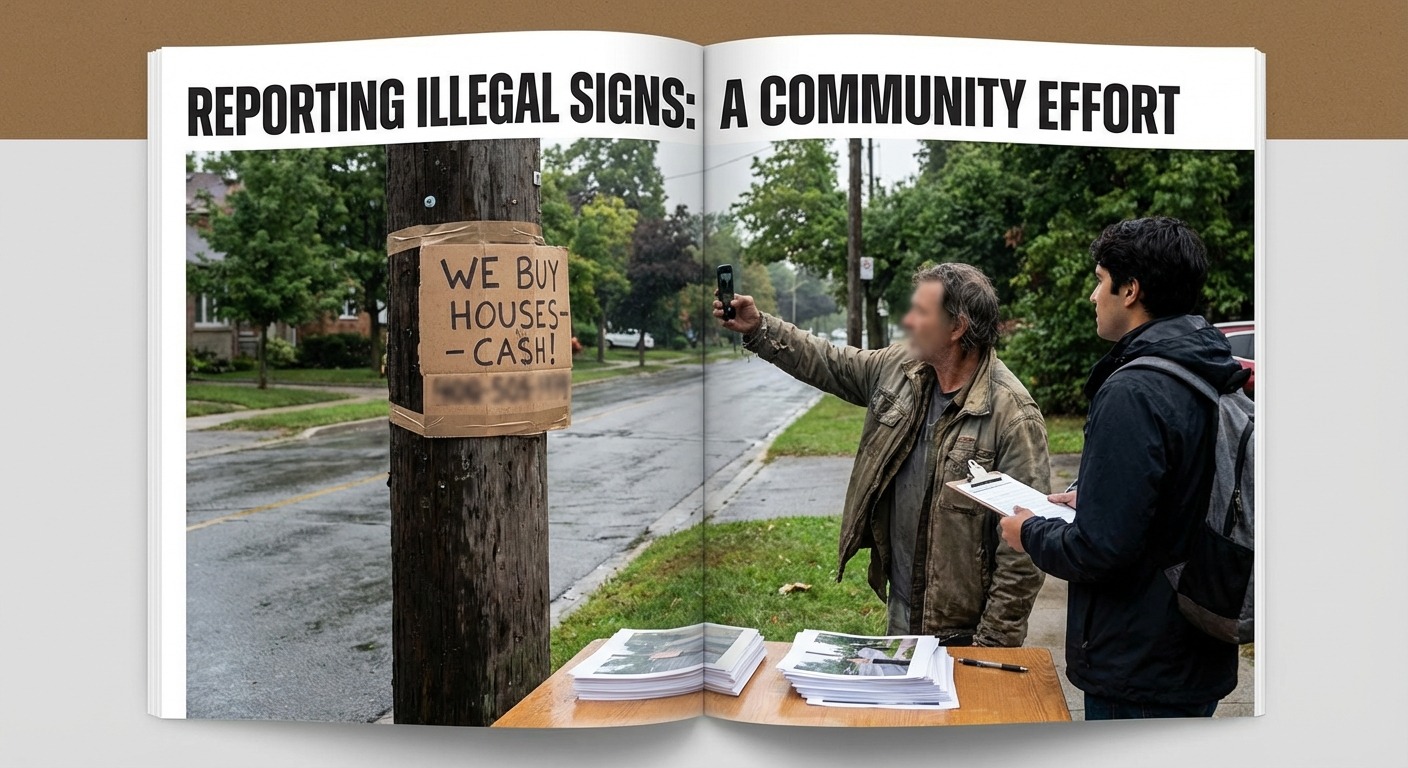
"We Buy Houses" on every utility pole. Always illegal, endlessly replaced, and the economics that make enforcement almost pointless.
Brightness measured in nits, dwell times of 6-10 seconds, and the driver distraction research that keeps municipal councils debating.
Sign enforcement in Ontario is complaint-driven. Signs stay up until someone reports them. Here is how that process actually works.
311 calls, online portals, photo documentation. The steps that get results versus the complaints that disappear into the system.
A bylaw officer gets assigned. Maybe they visit in 48 hours, maybe three weeks. The honest timeline from complaint to resolution.
Part-time officers covering entire townships. One sign enforcement officer for 300,000 residents. The staffing reality behind Ontario's enforcement gap.
Every municipality does it differently. Toronto has a dedicated Sign Unit. Some small towns have one part-time bylaw officer handling everything from noise to signs to property standards.
Chapter 693, the Third Party Sign Tax, a dedicated Sign Unit, and decades of billboard battles along the Gardiner and DVP.
By-law 2016-326, bilingual requirements in designated areas, and the particular headache of election signs in a federal capital.
By-Law 1573/23 rewrote the portable sign rules. Business owners pushed back. Council held firm. A case study in small-town sign politics.
All CitiesToronto, Ottawa, Mississauga, Brampton, Hamilton, Kitchener, London, and Petawawa — each with specific bylaw numbers and enforcement details.
What happens when bylaws meet reality. Real disputes, real enforcement actions, real outcomes.
The Globe and Mail investigation, the Auditor General's report, and why illegal billboards along the Gardiner remained profitable even after fines.
By-Law 1573/23 replaced decades-old portable sign rules. Local businesses called it overreach. Council said the old rules were unenforceable.
Liability exposure, sight triangle safety, and the MTO's data on intersection accidents involving sign obstructions.