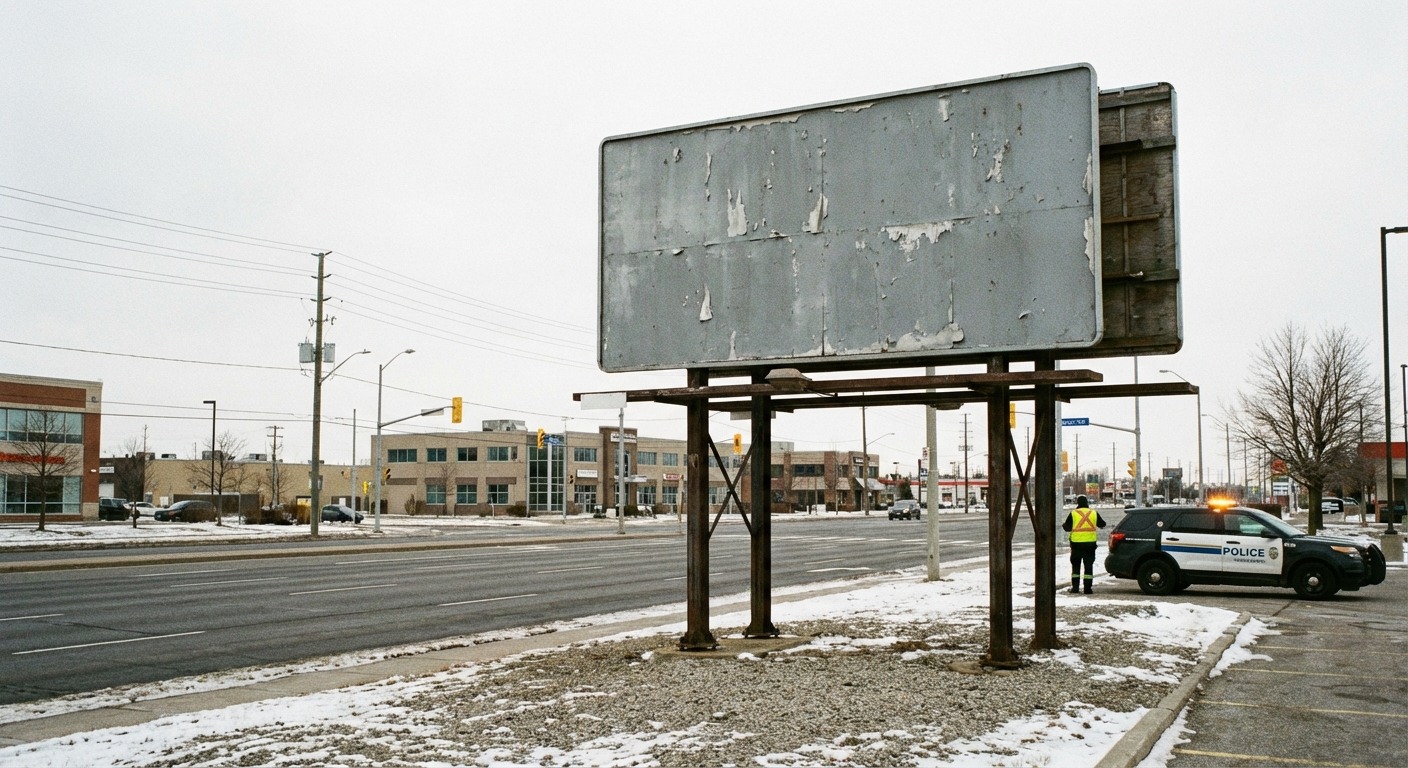
Toronto's battle with illegal billboards is one of the longest-running sign enforcement sagas in Ontario. It involves major outdoor advertising companies, millions in advertising revenue, media investigations, an Auditor General report, and a municipal government that has struggled for decades to control unauthorized billboard installations across the city.
The Scale of the Problem
Toronto has more billboards than any other Canadian city, and a significant portion of them have operated without proper permits at various points. The concentration is highest along major highways and arterial roads: the Gardiner Expressway, the Don Valley Parkway, Lake Shore Boulevard, Dundas Street, and Queen Street. These corridors offer massive daily traffic counts — over 200,000 vehicles per day on some sections of the Gardiner — making billboard locations along them extremely valuable.
A billboard on the Gardiner corridor can generate $5,000 to $15,000 per month in advertising revenue. A digital billboard at a major intersection can generate significantly more. With that revenue at stake, the financial incentive to install billboards — even without proper authorization — is substantial.
The Auditor General
Toronto's Auditor General has examined billboard enforcement multiple times and found persistent issues. Key findings have included:
- Unauthorized billboards operating for years before being addressed
- A backlog of enforcement cases that exceeded the Sign Unit's capacity to process
- Inconsistent tracking of billboard permits, making it difficult to determine which billboards were legal and which were not
- Fines that were insufficient to deter violations given the revenue billboards generated
- Lengthy legal proceedings that allowed unauthorized billboards to continue operating while cases moved through the courts
The Auditor General's reports prompted council to allocate additional resources to the Sign Unit and to pursue legislative tools — including the Third Party Sign Tax — to address the economic incentives driving illegal billboard installation.
Media Investigations
The Globe and Mail and the Toronto Star have both published investigative pieces on Toronto's billboard enforcement problems. These investigations documented specific unauthorized billboards, identified the companies operating them, and highlighted the gap between the city's stated enforcement policy and the reality on the ground.
Media coverage focused on several themes: the revenue that billboard operators were earning from unauthorized installations, the slow pace of enforcement proceedings, and the perception that some operators were treating fines as a cost of doing business rather than a deterrent. The coverage put political pressure on council to strengthen enforcement, contributing to bylaw amendments and increased funding for the Sign Unit.
The Third Party Sign Tax
One of Toronto's distinctive approaches to billboard regulation is the Third Party Sign Tax. This tax charges billboard operators an annual fee for every legal third-party sign in the city. The tax serves two purposes: it generates municipal revenue from billboard advertising, and it changes the economics of maintaining a large billboard inventory by increasing the operating cost of each location.
The tax does not directly address illegal billboards — you cannot tax a sign that does not officially exist. But it creates an additional financial pressure on operators to keep their billboard inventory within the regulated system. It also generates revenue that partly offsets the cost of enforcement against unauthorized signs.
The Enforcement Process
When the Sign Unit identifies an unauthorized billboard, the enforcement process typically follows these steps:
- Inspection and documentation of the unauthorized sign
- Compliance notice to the property owner and sign operator, ordering removal within a specified period
- If not removed: formal order under Chapter 693
- If still not removed: charges under Part III of the Provincial Offences Act
- If necessary: court order for removal and cost recovery from the property owner
The process from initial identification to final removal can take months or years for a contested billboard. During this time, the billboard continues to generate advertising revenue. This timeline is the core of the enforcement problem — the legal process is slow enough that operating an unauthorized billboard can be profitable even with eventual penalties.
The Cost-Benefit Problem
This is the fundamental challenge. A billboard generating $8,000 per month produces $96,000 per year in revenue. If the enforcement process takes 18 months from initial notice to final removal, the billboard generates $144,000 before it comes down. Even with fines of $10,000 to $50,000, the operator comes out ahead.
Toronto has responded by pursuing higher fines, seeking cost recovery for removal, and using the Third Party Sign Tax as an additional financial tool. The city has also worked to shorten the enforcement timeline by dedicating more legal resources to billboard cases. But the fundamental economic incentive — billboards are very profitable — means that new unauthorized installations continue to appear.
Current Status
Billboard enforcement in Toronto remains an active and evolving issue. The Sign Unit continues to identify and pursue unauthorized installations. Council periodically revisits the sign bylaw to strengthen enforcement provisions. Community groups along major corridors continue to report new installations and push for faster action. The situation is better than it was a decade ago — the 2010 bylaw overhaul and increased enforcement resources have made a difference — but the underlying tension between billboard revenue and municipal control has not been resolved.