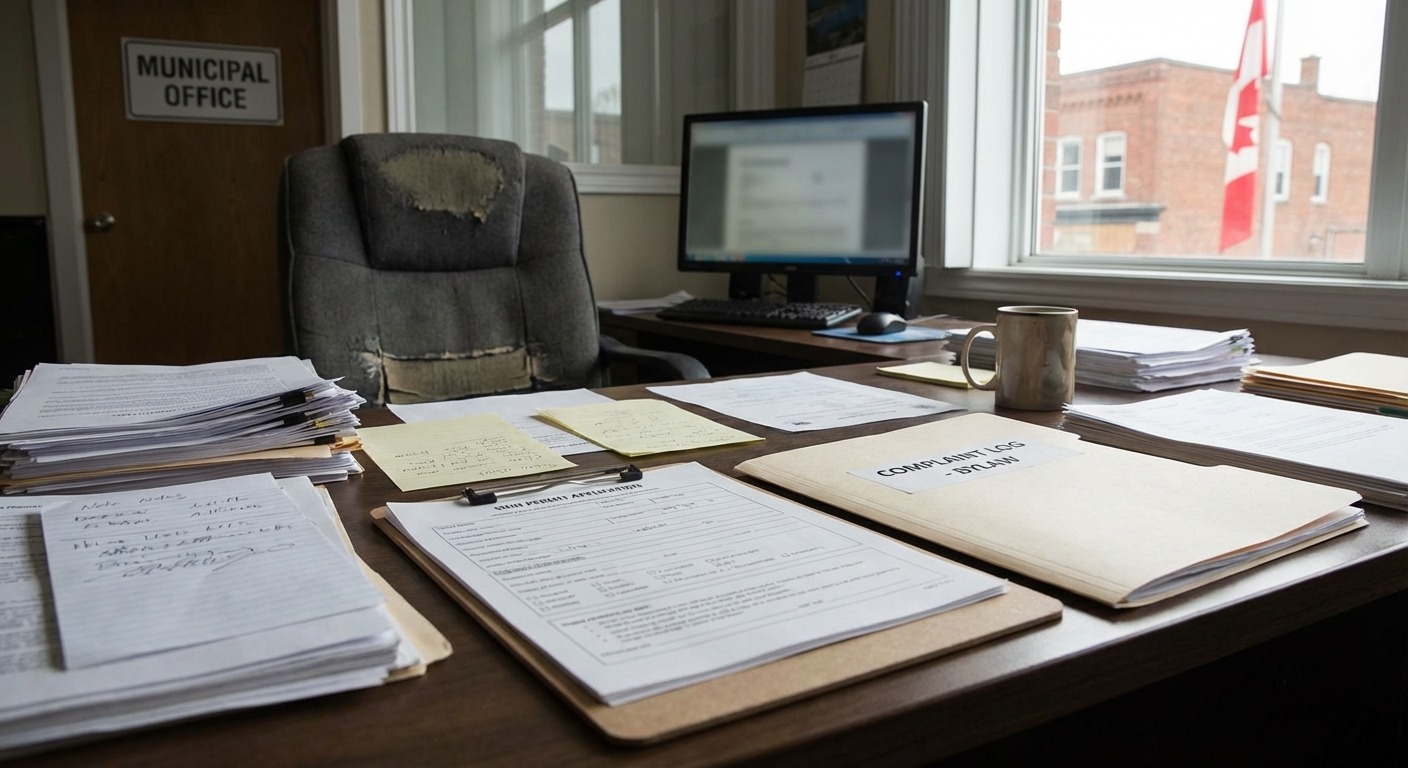
Most permanent signs and many temporary signs in Ontario require a municipal sign permit before installation. The process is not complicated, but it is slower and more expensive than most business owners expect. And skipping it — which is what a lot of people do, either out of ignorance or impatience — creates a violation that can result in fines, removal orders, and the cost of going through the process retroactively under worse conditions.
What Needs a Permit
The specifics vary by municipality, but generally:
Permit required:
- Fascia signs (flat signs on building walls) over a minimum size, typically 0.5 to 1.0 square metres
- Ground signs / pylon signs
- Projecting signs (signs that stick out from a building)
- Portable signs and mobile signs in many municipalities
- Electronic message centres / digital signs
- Billboards and third-party signs
- Roof signs (where permitted)
- Large construction signs
Typically exempt from permit (but still subject to bylaw):
- Small window signs (usually under 0.5 square metres or 25% of window area)
- Standard real estate "For Sale" or "For Lease" signs within size limits
- Election signs during permitted periods
- Small directional signs on private property
- Flags and banners within specified limits
The Application Process
A typical sign permit application requires:
Application form. Available on the municipality's website or at the building/planning department office. You fill out details about the sign type, dimensions, materials, illumination, and proposed location.
Site plan. A drawing showing where the sign will be placed on the property, with setback measurements from property lines, roads, and other signs. For ground signs, this needs to show the sign's position relative to the sight triangle at any nearby intersection.
Sign drawings. Dimensioned drawings of the sign itself, showing height, width, materials, colours, and how it will be mounted. For illuminated signs, include details about lighting type and brightness.
Landlord consent. If you are a tenant, most municipalities require written consent from the property owner.
Application fee. Payable when you submit the application. Fees vary significantly:
- Small temporary/portable sign: $50 to $150
- Standard fascia sign: $100 to $400
- Ground sign: $200 to $600
- Electronic message centre: $300 to $1,000
- Billboard / third-party sign: $500 to $2,000+
- Toronto tends to be on the high end. Smaller municipalities tend to be lower.
Processing Times
This is where expectations often collide with reality. Official processing targets vary:
- Straightforward applications (compliant sign, complete submission): 5 to 15 business days in most municipalities. Toronto's Sign Unit aims for 10 business days for simple applications.
- Complex applications (large signs, digital signs, signs needing variances): 4 to 12 weeks. Applications that trigger review by planners, heritage staff, or the Committee of Adjustment take significantly longer.
- Incomplete applications: Sent back for more information, which resets the clock. This is the most common cause of delays and frustration. Submitting an incomplete application — missing the site plan, wrong dimensions, no landlord consent — can add weeks.
For business owners on a timeline — planning a grand opening, launching a seasonal promotion — the processing time can be a serious issue. The solution is to apply early and submit a complete application the first time. Call the municipal building or planning department before you submit and ask what they need. An extra phone call upfront can save weeks of back-and-forth.
Common Reasons for Rejection
Sign permit applications get rejected for:
- Sign exceeds size limits — The most common rejection. The sign you want is bigger than what the bylaw allows for your property and zone.
- Wrong zone — The sign type you are applying for is not permitted in your zoning category. Ground signs may be allowed in commercial zones but not residential zones.
- Sight triangle conflict — The proposed location would obstruct driver sight lines at a nearby intersection.
- Too many signs — Most bylaws limit the number of signs per property or per street frontage. If your property already has the maximum number of signs, a new one will not be approved.
- Heritage district restrictions — Properties in heritage conservation districts face additional design and material requirements. A modern LED sign may not be approvable in a heritage area.
- Non-compliant illumination — The proposed sign is too bright, or the animation does not meet dwell time requirements.
When Your Application Is Denied: The Variance Process
If your sign does not comply with the bylaw, you can apply for a minor variance through the municipality's Committee of Adjustment. This is a separate application with its own fee (typically $500 to $1,500) and timeline (often 4 to 8 weeks from application to hearing).
To get a sign variance approved, you generally need to demonstrate four things:
- The variance is minor (the sign is only slightly larger, slightly taller, or slightly closer than permitted)
- The general intent and purpose of the bylaw is maintained
- The general intent and purpose of the official plan is maintained
- The variance is appropriate for the development of the land
Neighbours are notified of variance applications and can appear at the hearing to support or oppose them. A sign variance that triggers neighbourhood opposition — for example, a brightly lit sign near residential properties — is much harder to get approved.
Variance decisions can be appealed to the Ontario Land Tribunal (OLT), but this is expensive and time-consuming, and rarely worth pursuing for a sign issue.