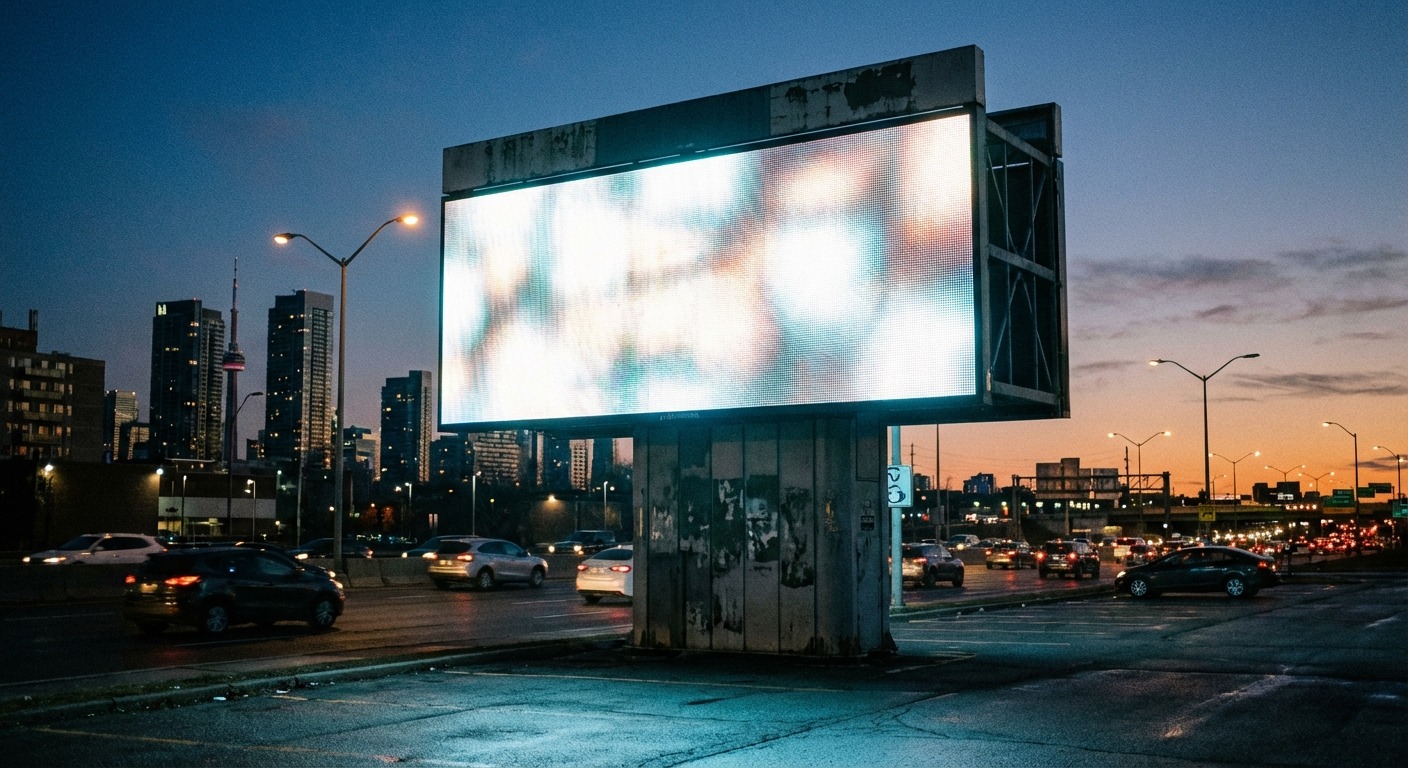
Digital signs — also called electronic message centres (EMCs) or LED displays — are the most contentious sign type in Ontario right now. Every municipality is either debating new regulations for them, amending existing regulations, or dealing with complaints about signs that were approved before the rules caught up with the technology. The core issues are brightness, distraction, and the question of whether a sign that changes every few seconds is fundamentally different from a static sign.
How They Are Regulated
Ontario municipalities regulate digital signs through a combination of general sign bylaw provisions and specific EMC rules. The key regulatory dimensions:
Brightness. Measured in nits (candelas per square metre). A typical laptop screen is about 300 nits. A digital billboard at full power can reach 7,000+ nits — bright enough to be visible in direct sunlight and blindingly bright at night. Most municipal bylaws now set maximum brightness levels:
- Daytime maximum: typically 5,000 to 7,000 nits
- Nighttime maximum: typically 300 to 500 nits
- Automatic dimming via photocell sensor required (the sign must dim itself as ambient light decreases)
Brightness complaints are common in mixed-use areas where digital signs near residential properties light up bedrooms at night. Even with auto-dimming, a 300-nit sign at night is significantly brighter than the ambient environment in a residential neighbourhood.
Dwell time. The minimum time each message must remain on screen before changing. This is the main tool municipalities use to prevent digital signs from functioning as video screens. Common requirements:
- Ottawa: 6 seconds minimum dwell time
- Toronto: 6 to 10 seconds depending on location and sign type
- Many smaller municipalities: 8 to 10 seconds
A 6-second dwell time means the sign displays one static image for at least 6 seconds before transitioning to the next. The transition itself must be instantaneous (no dissolves, scrolling, or animation). Anything faster approaches video, which is prohibited.
Animation and video. Most Ontario municipal bylaws prohibit full-motion video, scrolling text, flashing, and animated transitions on digital signs. The permitted format is essentially a static image that changes periodically. Some bylaws allow animated text (scrolling time and temperature, for example) but prohibit animated graphics.
Location restrictions. Many municipalities restrict where digital signs can be installed. Common restrictions include prohibitions near residential zones, minimum separation distances from other digital signs, setback requirements from intersections, and special restrictions in heritage districts. Some municipalities prohibit new digital third-party signs (digital billboards) entirely while allowing first-party digital signs with conditions.
The Driver Distraction Debate
The most significant policy concern with digital signs is driver distraction. Research on the topic is mixed and hotly debated:
Studies funded by the outdoor advertising industry generally conclude that digital billboards do not significantly increase crash risk. Studies funded by safety organizations and municipalities have found measurable increases in driver eye fixation times — the amount of time a driver's eyes stay focused on the sign rather than the road — near digital billboards, particularly when the sign content changes while the driver is watching.
The Swedish National Road and Transport Research Institute conducted one of the most cited studies, finding that digital billboards attracted longer glances from drivers than static billboards, particularly when content changed. Canadian research by the Traffic Injury Research Foundation has also examined the issue.
Municipalities cite this research when imposing stricter regulations. The outdoor advertising industry counters that the research does not establish a causal link between digital signs and actual collisions. The debate continues in council chambers across Ontario every time a new digital sign application or bylaw amendment comes forward.
Common Complaints
Residents near digital signs typically complain about:
- Brightness at night — Even with auto-dimming, the sign is noticeably bright in a dark residential environment. This is the most common complaint.
- Light trespass — Light from the sign spilling into adjacent properties, particularly bedroom windows.
- Content changes — Signs that change content frequently, particularly those operating at or below the minimum dwell time, draw attention in a way that static signs do not.
- Aesthetic impact — Digital signs change the visual character of a neighbourhood, particularly in older areas where the built form is lower-scale.
The Conversion Issue
One of the most contentious aspects is the conversion of existing static signs to digital. An operator with a permitted static billboard wants to convert it to LED because a digital billboard generates three to five times the revenue of a static one. Most municipalities treat this as a new sign requiring a new permit under current standards — not a modification of the existing sign. This means many proposed conversions are denied because the sign's location, size, or proximity to residential areas would not meet current digital sign standards.
Some operators have attempted to argue that their existing static sign permit covers a conversion to digital, or that their sign is grandfathered. These arguments have generally not succeeded before Ontario courts and tribunals.
Getting a Digital Sign Approved
If you are a business or property owner considering a digital sign, expect a more rigorous permit process than for a static sign. You will likely need:
- A detailed application showing the sign's specifications, including brightness levels (daytime and nighttime), dwell time settings, and dimming technology
- A photometric study showing light levels at the property line and at adjacent properties
- Evidence that the sign location meets all setback, separation, and zoning requirements
- Potentially a variance application if the sign does not meet all current requirements
Application fees for digital signs are typically higher than for static signs — $300 to $1,000+ depending on the municipality. Processing times are longer because the application may need review by planning staff, and neighbour notification may be required.
For the broader policy debate about digital billboards across Ontario, see our case study on digital billboard debates.