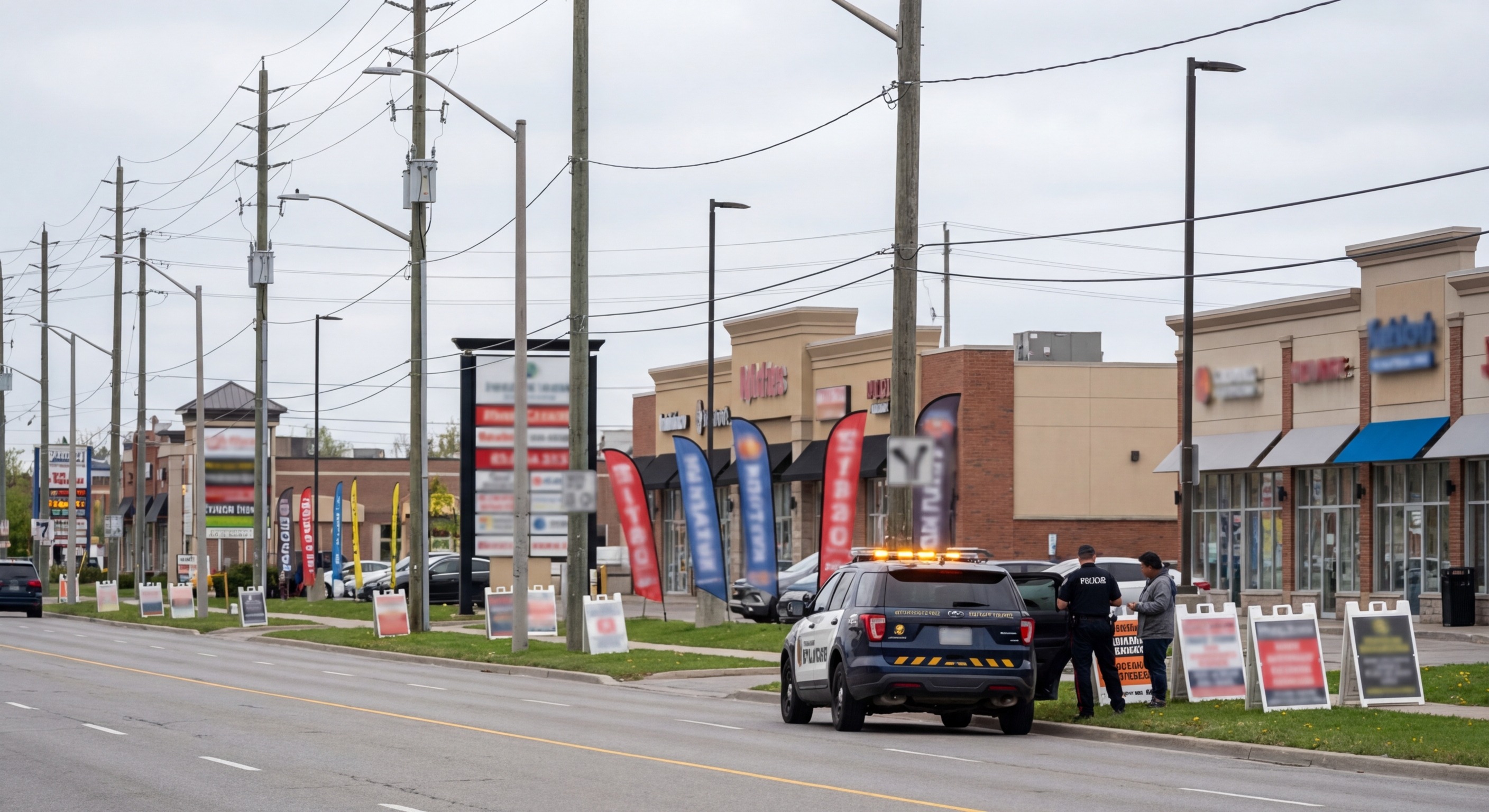
Brampton's Sign By-law 399-2002 governs sign regulation in one of Canada's fastest-growing cities. With a population that has grown from under 400,000 in 2006 to over 650,000 today, Brampton's sign enforcement challenges are shaped by rapid development: new commercial areas, new businesses, and a constant stream of new signage outpacing the capacity to regulate it.
Key Features
Growth-driven challenges. New commercial plazas and retail corridors are opening regularly in Brampton's north and west ends. Businesses in these areas are installing signs — some with permits, some without — at a pace that makes proactive enforcement difficult. The bylaw applies to new areas as they develop, but enforcement tends to be reactive to complaints rather than proactive during the construction and initial occupancy phase.
Commercial plaza signage. Brampton has extensive commercial plaza development along corridors like Queen Street, Bovaird Drive, and Highway 10. Sign issues in plazas are common: businesses exceed their allocated sign area, add unauthorized A-frames, or install signs that do not match the plaza's approved sign plan. Plaza landlords are technically responsible for ensuring tenant compliance with the overall sign plan, but enforcement of this responsibility is inconsistent.
Bandit sign problems. Brampton's rapid growth has made it a target for bandit sign operators advertising construction services, cash-for-houses operations, and financial services. The volume of bandit signs along major corridors is a persistent complaint from residents and council.
Sign Permits
Permit requirements follow the standard Ontario pattern: permanent signs and most large temporary signs require permits. Fees are comparable to other GTA municipalities. The planning and building department processes sign permit applications.
Reporting
Brampton 311: Phone 311 (or 905-874-2000), or through the city's online service request system. Bylaw enforcement handles sign complaints alongside other categories.