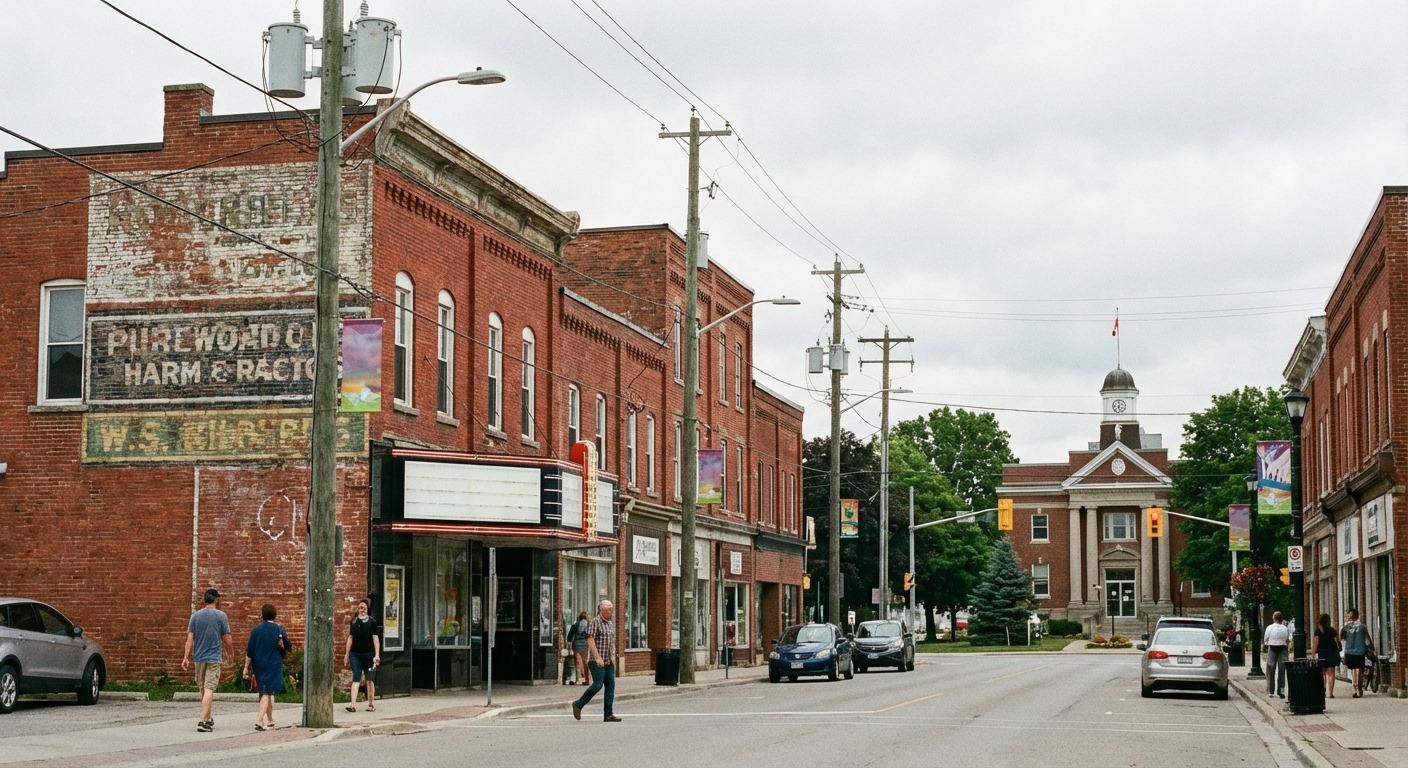
Ontario has 444 municipalities. The vast majority are not Toronto, Ottawa, or Hamilton. They are towns of 5,000 to 30,000 people, townships covering hundreds of square kilometres with dispersed populations, and small cities where the entire municipal staff fits in one building. Sign enforcement in these communities looks nothing like what happens in the GTA.
The Staffing Reality
In a small Ontario municipality, bylaw enforcement is typically handled by one or two generalist officers — sometimes one full-time, sometimes part-time. These officers handle every type of bylaw complaint: property standards, noise, animals, fences, pools, parking, zoning, and signs. Sign enforcement is a small fraction of their workload, and it is rarely the highest priority.
A typical small-town bylaw officer might handle 200 to 400 complaints per year across all categories. Of those, sign complaints might represent 10 to 30 per year — enough to be a regular part of the job, but not enough to justify specialized knowledge or dedicated enforcement time. The officer knows the sign bylaw, but they also know the property standards bylaw, the noise bylaw, the animal control bylaw, and everything else they are responsible for.
What Small-Town Enforcement Looks Like
Almost entirely complaint-driven. Proactive sign enforcement in a small municipality is rare. The officer is not driving around looking for sign violations when there are property standards complaints, animal control calls, and zoning issues to deal with. Signs get addressed when someone reports them.
Relationships matter. In a small community, the bylaw officer may know the sign owner personally. The business owner whose portable sign violates the bylaw is someone the officer sees at the grocery store. The property owner who needs a compliance notice coaches little league with the officer. This does not mean enforcement is compromised, but it means enforcement interactions are more personal and often more diplomatic than in a large city.
Education before enforcement. Small-town bylaw officers typically start with a conversation rather than a compliance notice. They call the business owner, explain the issue, and ask for voluntary compliance. In most cases, this works — the business owner did not know the rule, appreciates being told rather than fined, and makes the change. Formal enforcement actions are reserved for people who refuse to comply after being informed.
Political sensitivity is heightened. In a town with five council members, the business community is a significant constituency. A bylaw officer who is perceived as overly aggressive on sign enforcement may face political pushback. Council members hear from business owners directly — often the same day an enforcement action is taken — and the pressure can flow from council to the CAO to the officer quickly.
Common Small-Town Sign Issues
Portable signs on the main strip. Most small Ontario towns have a single main commercial corridor. Portable signs along this corridor are a primary advertising method for local businesses. When the bylaw limits the number, size, or placement of portable signs, the impact is felt immediately by business owners who depend on them. Petawawa's 2023 bylaw update is a documented example of this dynamic.
Home-based businesses. In rural and semi-rural areas, home-based businesses are common. The sign at the end of the driveway advertising a welding shop, a hair salon, or a farm stand is a fixture of small-town Ontario. These signs are often non-compliant — in the right-of-way, oversized, or lacking a permit — but enforcement is rare unless a neighbour complains.
Farm signs. Agricultural operations in rural Ontario commonly display signs advertising farm stands, U-pick operations, and seasonal products. These signs are often placed on road allowances and at intersections, technically in the right-of-way. Agricultural communities tend to be tolerant of farm signs, and enforcement is minimal unless there is a specific complaint.
Bandit signs from out-of-town operators. "We Buy Houses" and similar bandit signs placed by operators from larger urban centres appear in small towns along major highways. These are particularly frustrating for small-town enforcement because the sign placer is not local, is difficult to identify, and does not respond to the personal approach that works with local violators.
The Enforcement Gap
The honest reality is that sign bylaws in many small Ontario municipalities are minimally enforced most of the time. The bylaw exists, and it is applied when someone complains. But the gap between what the bylaw says and what actually happens on the ground is wider in small communities than in large ones.
This is not necessarily a problem. In many small communities, the informal norms about signage are reasonable: businesses keep their signs neat, nobody puts up anything outrageous, and the occasional non-compliant sign is tolerated as part of the community's character. The bylaw serves as a backstop for when things go wrong — a new business that puts up 12 signs, an out-of-town operator plastering the highway with bandit signs — rather than as a daily enforcement tool.
The problem arises when the informal norms break down. A business dispute where one owner reports a competitor's signs. A new resident with different expectations about visual standards. A council that decides the main street looks cluttered and directs enforcement. These triggers can shift a community from minimal enforcement to active enforcement quickly, and the transition is always uncomfortable.